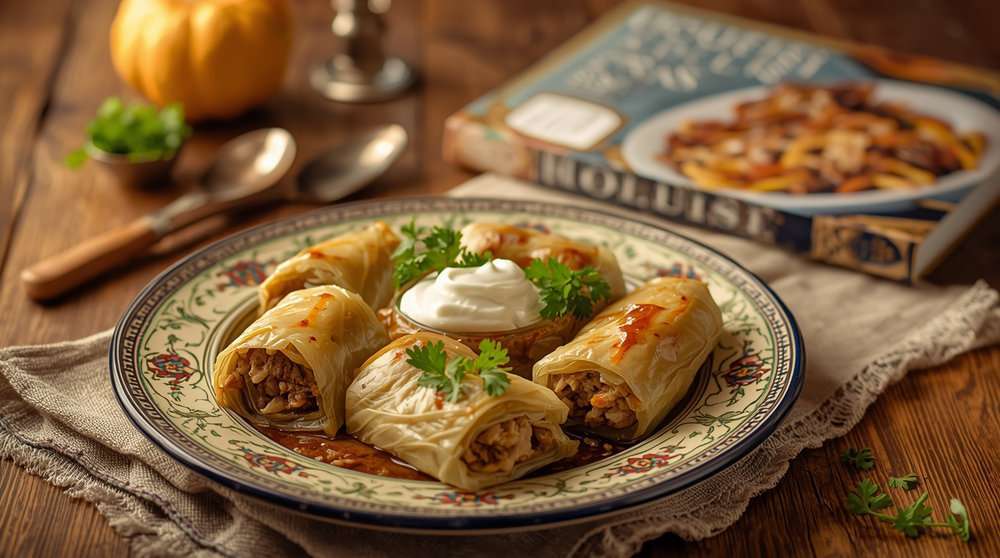
Few dishes in Ukrainian cuisine are as comforting, festive, and symbolic as holubtsi — cabbage rolls stuffed with grains, vegetables, and often meat. Their aroma instantly brings to mind family gatherings, holiday tables, and the warmth of home. Though versions of stuffed cabbage exist across Eastern Europe and the Middle East, the Ukrainian holubtsi has its own story, rooted in tradition and adaptation through centuries.
Historical Origins of Holubtsi
The history of holubtsi stretches back hundreds of years. The name itself is thought to come from the word holub (“pigeon” in Ukrainian), possibly because the shape of the cabbage rolls resembles small birds, or because they were once wrapped in vine leaves — a dish associated with Mediterranean dolma, which made its way to Eastern Europe through cultural exchanges.
By the 18th century, stuffed cabbage became firmly established in Ukrainian cuisine. Families would prepare them for weddings, Christmas, and Easter, making them a dish of both everyday sustenance and festive abundance. Holubtsi also symbolized hospitality and family unity, as they were often cooked in large batches to feed guests.
Traditional Ingredients
Classic Ukrainian holubtsi use cabbage leaves as wrappers, filled with a hearty stuffing. Common ingredients include:
- Cabbage — fresh or pickled, depending on the season.
- Grains — rice, buckwheat, or millet.
- Vegetables — onions, carrots, mushrooms, or beans.
- Meat — pork, beef, or a mix, especially in festive versions.
- Sauces — tomato-based sauces or creamy mushroom gravies.
This combination made the dish both filling and versatile. In poorer households, vegetarian versions with grains and vegetables were common, while wealthier families added meat.
How Holubtsi Are Made
The process of preparing holubtsi is as symbolic as it is delicious:
- Preparing the cabbage — whole heads are boiled until leaves soften and can be separated. Pickled cabbage leaves are used in winter for a tangy flavor.
- Making the filling — grains are parboiled and mixed with sautéed onions, carrots, and sometimes mushrooms or minced meat.
- Rolling — spoonfuls of filling are placed on each leaf, rolled tightly into small parcels.
- Cooking — holubtsi are layered in a pot, covered with sauce, and slow-simmered until tender.
The result is a comforting, flavorful dish that embodies the patience and care of home cooking.
Regional Variations
Different regions of Ukraine have their own takes on holubtsi:
- Polissia: buckwheat-based fillings with mushrooms.
- Hutsul region: smaller rolls made with sour cabbage leaves, often vegetarian.
- Central Ukraine: rice and pork with tomato sauce.
- Festive holubtsi: miniature rolls (sometimes called “malenʹki holubtsi”), symbolizing abundance and generosity.
Holubtsi in Festive Traditions
Holubtsi are especially important during Christmas Eve (Sviata Vecheria), when they are prepared without meat, often with rice, buckwheat, and mushrooms. On Easter and weddings, meat-filled versions take center stage, highlighting celebration and prosperity.
The dish also appears in Ukrainian folklore and songs, where it represents hospitality, fertility, and the joy of family life.
Modern Adaptations
Today, holubtsi remain popular both in traditional households and modern kitchens. Creative adaptations include:
- Vegetarian and vegan holubtsi — filled with lentils, beans, or mushrooms.
- Light versions — baked instead of simmered, with less oil.
- Fusion styles — stuffed with quinoa, bulgur, or even tofu for a modern twist.
Despite innovations, the essence of holubtsi remains unchanged: a dish of love, care, and togetherness.
Health Benefits
Holubtsi, especially when prepared with grains and vegetables, are highly nutritious:
- Rich in fiber from cabbage and grains.
- Source of plant-based protein (in vegetarian versions).
- Balanced meal with carbohydrates, protein, and vitamins.
- Lower in fat when prepared without lard or heavy sauces.
This balance makes holubtsi a timeless staple for both festive and everyday meals.
Conclusion
Holubtsi are more than just stuffed cabbage rolls — they are a culinary symbol of Ukrainian heritage. Their history reflects centuries of cultural exchange, adaptation, and tradition. From festive feasts to humble family dinners, holubtsi embody warmth, unity, and the spirit of home.
Whether prepared with meat or vegetables, in tomato sauce or with mushrooms, each pot of holubtsi tells a story of resilience, creativity, and the simple joy of sharing food.