

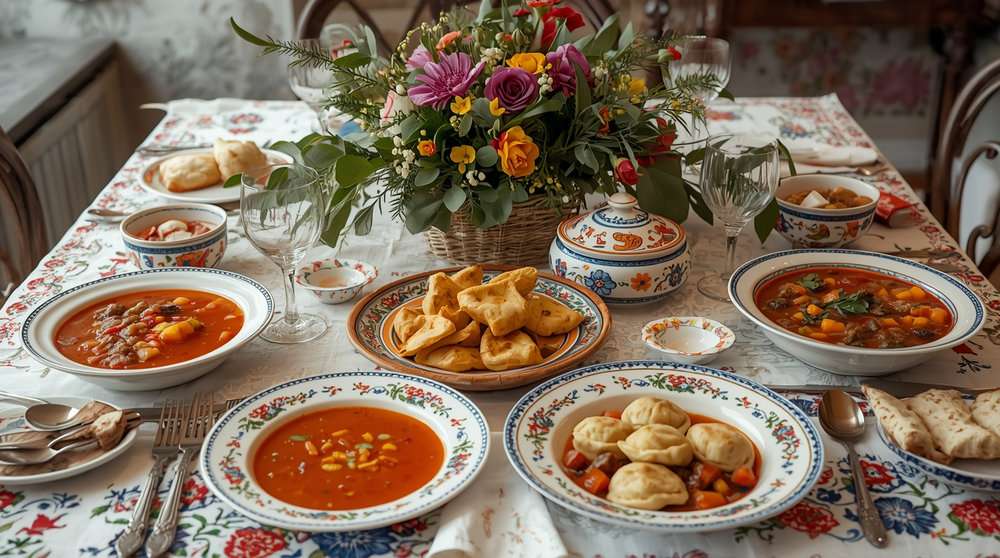
Ukrainian cuisine is more than just food; it is a reflection of history, geography, and cultural identity. From the golden fields of wheat that earned Ukraine the title “breadbasket of Europe” to the hearty dishes prepared in small village kitchens, the story of Ukrainian cooking stretches back centuries. Each recipe embodies layers of history — conquests, migrations, trade, and daily traditions that shaped what Ukrainians eat today.
Ancient Roots: The Land and Its Bounty
Ukraine’s fertile black soil, known as chernozem, has always been central to its culinary heritage. Even in prehistoric times, tribes settled in these lands because of the abundance of grains, vegetables, and wild game. Archaeological findings suggest that early Slavic tribes cultivated millet, barley, and rye, staples that remain important in Ukrainian cooking.
Grain was not just sustenance — it became a symbol of life, prosperity, and hospitality. This explains why bread holds a sacred place in Ukrainian culture, with traditions of baking round loaves for weddings, harvest festivals, and religious holidays.
The Kyivan Rus Era (9th–13th centuries)
The formation of Kyivan Rus, a powerful medieval state, marked an important phase in culinary development. The people of Rus traded with Byzantium, Scandinavia, and the East, bringing new foods and culinary techniques. Honey was a treasured sweetener, and mead became one of the most popular drinks.
Meat and fish were often preserved by smoking, drying, or salting. Fermentation played a major role, giving rise to foods like sauerkraut, pickled cucumbers, and kvass — beverages and preserves that remain cornerstones of Ukrainian cuisine today.
Mongol Invasions and Tatar Influences
The Mongol invasions in the 13th century brought destruction but also culinary influences from Central Asia. Techniques for cooking lamb, dumpling-like dishes, and the use of spices such as black pepper entered the Ukrainian kitchen. These flavors blended with local traditions, creating a unique synthesis that is still noticeable in dishes like varenyky (dumplings) and holubtsi (stuffed cabbage rolls).
Polish-Lithuanian Commonwealth and Noble Cuisine
From the 14th to the 18th century, much of Ukrainian territory was under the Polish-Lithuanian Commonwealth. This period introduced aristocratic culinary traditions, rich pastries, and refined meat dishes. The nobility often dined on roasted meats, game, and elaborate desserts, while peasants relied on cabbage, potatoes, and grains.
This divide in cuisine helped preserve the authenticity of rural Ukrainian cooking. What is considered “traditional” today — dishes like borscht, dumplings, and kasha — evolved from peasant food that was practical, nourishing, and tied to the land.
The Cossack Era
The Cossacks, known for their independence and martial culture, also left a mark on Ukrainian cuisine. Living on the steppe, they relied on hunting, fishing, and foraging. A dish called kulish — a porridge made of millet, pork fat, and onions — became a symbol of Cossack resilience. It was simple to cook over a campfire and hearty enough to sustain warriors.
Russian Empire and Austro-Hungarian Influences
As Ukrainian lands were divided between the Russian Empire and the Austro-Hungarian Empire, regional differences in cuisine developed.
- In the west, under Austrian rule, dishes like schnitzels, strudels, and coffee culture influenced Galicia.
- In the east, Russian culinary practices mingled with local traditions, introducing pies, pancakes, and soups with richer broths.
This diversity created a mosaic of regional cuisines across Ukraine, from the dairy-rich foods of Polissia to the fish dishes of the Black Sea coast.
Soviet Era: Standardization and Survival
The 20th century brought political upheaval, famine, and Soviet rule, which deeply affected Ukrainian food culture. Many traditional recipes were simplified or standardized in Soviet cookbooks. At the same time, famine and shortages forced people to adapt and rely on basic staples like potatoes, cabbage, and beets.
Yet, despite these hardships, iconic dishes survived and even spread across the USSR. Ukrainian borscht, for example, became one of the most recognized soups throughout the Soviet Union, although its Ukrainian roots were sometimes overlooked.
Ukrainian Independence and Culinary Revival
Since Ukraine regained independence in 1991, there has been a strong movement to revive authentic culinary traditions. Chefs and food historians have rediscovered forgotten recipes, emphasizing local ingredients and ancestral techniques. Seasonal produce, artisanal cheeses, traditional pickling, and home-baked breads are making a comeback.
Today, Ukrainian cuisine is celebrated both domestically and abroad. Restaurants in Kyiv, Lviv, and Odesa reinterpret traditional dishes with modern flair, while families continue to pass down recipes for borscht, varenyky, pampushky, and uzvar.
Symbolism and Cultural Identity
More than nutrition, Ukrainian cuisine carries symbolism. Bread and salt remain a traditional greeting for guests, symbolizing hospitality and respect. Ritual foods such as kutia (sweet grain pudding) during Christmas or paska (Easter bread) reflect deep spiritual traditions. Each dish tells a story — of struggle, survival, and the enduring connection between people and land.
Conclusion
The origins of Ukrainian cuisine reveal a fascinating journey through history. From the fields of ancient farmers to the festive tables of today, Ukrainian food is a living record of resilience and cultural pride. It is a cuisine born of fertile soil, enriched by diverse influences, and preserved through generations.
As Ukrainian cuisine gains international recognition, it serves not only as nourishment but also as a cultural ambassador, telling the world about the spirit, history, and heart of Ukraine.

