Food is never just about nourishment — it carries memories, emotions, and symbols that weave into the fabric of culture. In Ukraine, cuisine has always been a central element of daily life and national identity, so it is no surprise that it occupies a special place in literature, songs, and folklore. Traditional dishes are more than recipes: they are characters in folk tales, metaphors in poetry, and companions in the stories of everyday people.
The Role of Food in Ukrainian Culture
For centuries, Ukrainians lived close to the land. Their daily meals reflected the rhythm of agriculture, religious rituals, and family traditions. Because food was deeply connected with survival and festivity, it became a natural theme in storytelling.
Dishes like borscht, varenyky, holubtsi, kutia, and salo appear not only on the table but also in proverbs, songs, riddles, and classic works of Ukrainian literature, symbolizing abundance, hospitality, humor, and resilience.
Ukrainian Cuisine in Folklore
Proverbs and Sayings
Folk wisdom often uses food imagery to express life lessons:
- “Borscht without bread is like a house without a foundation.”
- “Without varenyky, there is no holiday.”
- “Salo is the strength of a Cossack.”
Such sayings reflect the central place of these dishes in everyday life, showing how food was seen as the basis of strength, joy, and survival.
Folk Songs
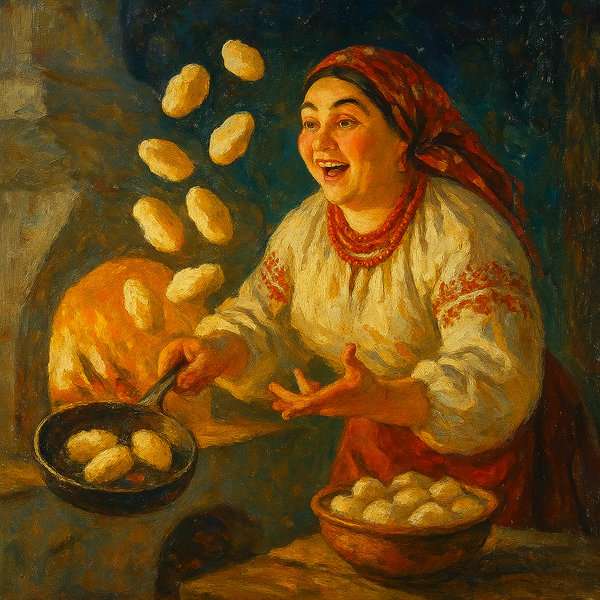
In Ukrainian folk songs, food often symbolizes love, family, and comfort. For example, varenyky appear in humorous songs about matchmaking and weddings, while bread and salt are mentioned as tokens of hospitality and respect.
Fairy Tales and Legends
In fairy tales, food sometimes acts as a magical helper. Porridge might multiply endlessly to feed the hungry, while bread could symbolize life itself. These tales highlight the sacred respect for food in agrarian culture, where wasting even a crumb was considered a sin.
Ukrainian Cuisine in Classic Literature
Ivan Kotliarevsky’s Eneida (1798)
Often considered the first masterpiece of modern Ukrainian literature, Kotliarevsky’s Eneida reimagines Virgil’s epic with Ukrainian Cossacks as the heroes. The text humorously describes feasts filled with borscht, varenyky, galushky, and horilka, painting a lively picture of Ukrainian culinary traditions of the 18th century.
Taras Shevchenko
Ukraine’s national poet, Taras Shevchenko, often referred to the simplicity of peasant meals — bread, onions, milk — as symbols of home, humility, and authenticity. For him, food became a metaphor for the dignity and endurance of ordinary Ukrainians.
Nikolai Gogol
Born in Ukraine, Gogol immortalized Ukrainian feasts in his works, especially in Evenings on a Farm Near Dikanka. Tables overflow with dumplings, roast meats, and pancakes, reflecting both the abundance of Ukrainian hospitality and the magical realism of folk imagination.
Lesya Ukrainka and Later Writers
Writers of the late 19th and early 20th centuries often portrayed food as part of domestic scenes, connecting it to themes of family, tradition, and longing for homeland. Even in modern Ukrainian literature, food continues to serve as a cultural anchor.
Symbolism of Ukrainian Dishes
- Bread and Salt — hospitality, respect, and sacred blessing.
- Borscht — community and unity, as it was always cooked in large pots to feed many.
- Varenyky — joy, festivity, and humor, often featured in songs.
- Kutia — remembrance and spirituality, served on Christmas Eve in honor of ancestors.
- Salo — strength, resilience, and national pride.
These foods go beyond the kitchen, becoming symbols in the collective imagination.
Food as a Bridge Between Past and Present
In literature and folklore, Ukrainian cuisine reflects not only recipes but also values: family, generosity, humor, endurance, and connection to the land. Today, when Ukrainians cook borscht or serve bread and salt to guests, they are continuing a tradition deeply rooted in storytelling.
Through every proverb, song, and novel, cuisine remains a living language of culture — one that nourishes both body and soul.
Conclusion
Ukrainian cuisine in literature and folklore is not just about what people ate, but about what they cherished, celebrated, and remembered. From the playful dumplings of folk songs to the solemn kutia of Christmas Eve, food carries stories that connect generations.
To taste Ukrainian cuisine is, in many ways, to read its poetry and hear its songs — a cultural dialogue that continues from the past into the present.